Back
Fulton, MO
Drywall & Paint in Fulton, MO
Patching, texturing, and painting that leaves your walls looking flawless.
Get a free estimateTell us your number and we will call you back.
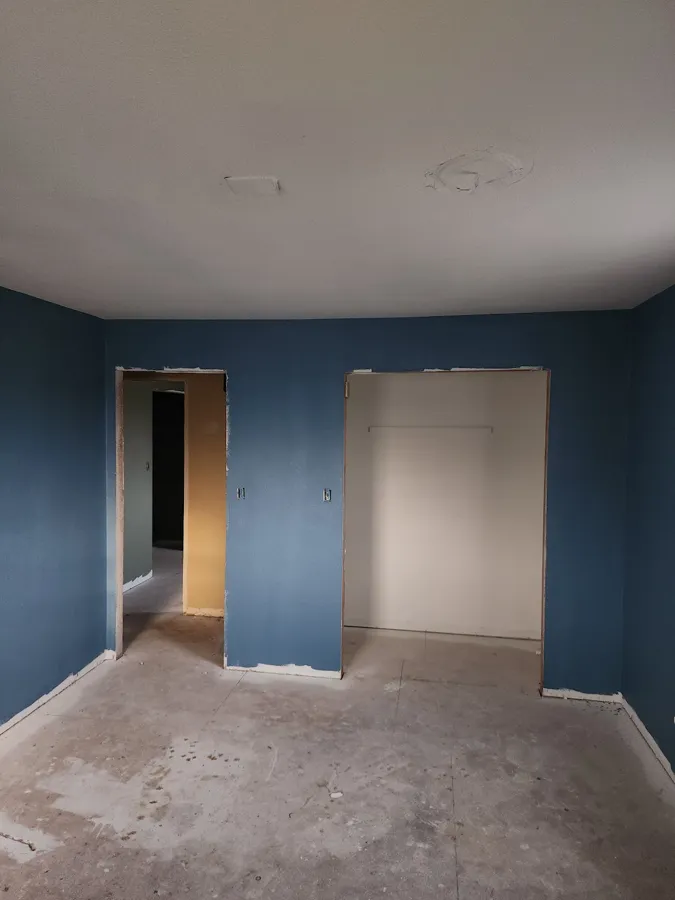
Filling a hole takes a few minutes. Making it disappear takes most of the job. A clean patch needs firm backing, tape over the seams, and several thin coats of compound that each dry fully and get feathered out well past the damage. Then the texture has to match the wall around it, and primer has to seal the patch so the paint does not soak in and dry to a different sheen. Skip any of that and you get the classic result, a flat spot you can see from across the room every time the light hits it.
Mid-Missouri houses move with the seasons. Humid summers and dry, heated winters make the framing swell and shrink a little every year, and that movement tends to show up as cracks running off the corners of doors and windows, or as seams and nail heads that start to appear. Filling a crack like that with more compound usually buys you one season. It needs to be opened up and retaped so it can hold. Water stains work the same way. If the leak is not stopped first and the stain is not sealed with a stain-blocking primer, it bleeds right back through new paint.
Age matters here too. About half of Fulton's homes were built before 1970, and roughly one in six went up before 1940, according to the Census. The oldest of those may have plaster instead of drywall, which patches differently, so tell us if you know. Paint from before 1978 can contain lead, and older joint compound and texture can contain asbestos, so a sample test is worth doing before anyone sands or cuts into an old wall. One more tip: keep your leftover paint. Even an old can helps us match the color and sheen of what is already on the wall.

Yes. Patching first just means doing it twice, because the stain comes back through. Get the source dealt with, then we can make the ceiling or wall look right.
Often, yes. Older paint fades and a touch-up can stand out even in the same color. We will look at the wall and tell you which way makes sense.
Not until you know what is in them. Lead paint and asbestos are both possible in older homes, so get a sample tested before anyone sands or cuts.
Home repairs, kitchen and bathroom remodels, decks, drywall, paint, carpentry, and the rest of the honey-do list. If you're not sure, just ask.
That's our favorite kind of call. Hand us the full list and we'll knock it all out in a single visit so you're not chasing down multiple contractors.
Yes. Estimates are always free with no pressure.